
Black Myth: Wukong Difficulty Comparison With Elden Ring
The debate over **Black Myth: Wukong** vs **Elden Ring** difficulty hinges on playstyle and tools, with Wukong's aggressive, linear combat contrasting sharply against Elden Ring's open-world flexibility and brutal DLC.
Put Black Myth: Wukong and Elden Ring in the same conversation, and the difficulty debate starts almost instantly. Ever since Game Science’s breakout hit launched in August 2024, players have been asking the same thing across Reddit, Steam, and YouTube: is black myth wukong harder than elden ring? By 2026, after a huge number of clears, challenge runs, and plenty of Steam achievement tracking, the answer is a lot clearer than it was at launch — but it still is not a clean yes-or-no situation. Both games stick to a no-easy-mode philosophy, yet the way they pressure you is very different.
Is Black Myth: Wukong Harder Than Elden Ring
The short version? It depends a lot on what kind of player you are. If you already have a Soulsborne background, Black Myth: Wukong will probably feel nastier right away, especially in the early and mid-game where bosses come at you hard and fast. Elden Ring usually ramps up more slowly, then hits much harder later on, especially once DLC enters the picture.
A solo run is where the biggest difference shows up. In Wukong, there is no co-op bailout, no spirit ashes, and no friendly summon to pull aggro off you when a fight starts going sideways. You and the boss are pretty much locked in. Elden Ring gives you way more room to soften encounters through NPC summons, online co-op, and spirit ashes, and that alone changes the first-playthrough difficulty in a massive way.
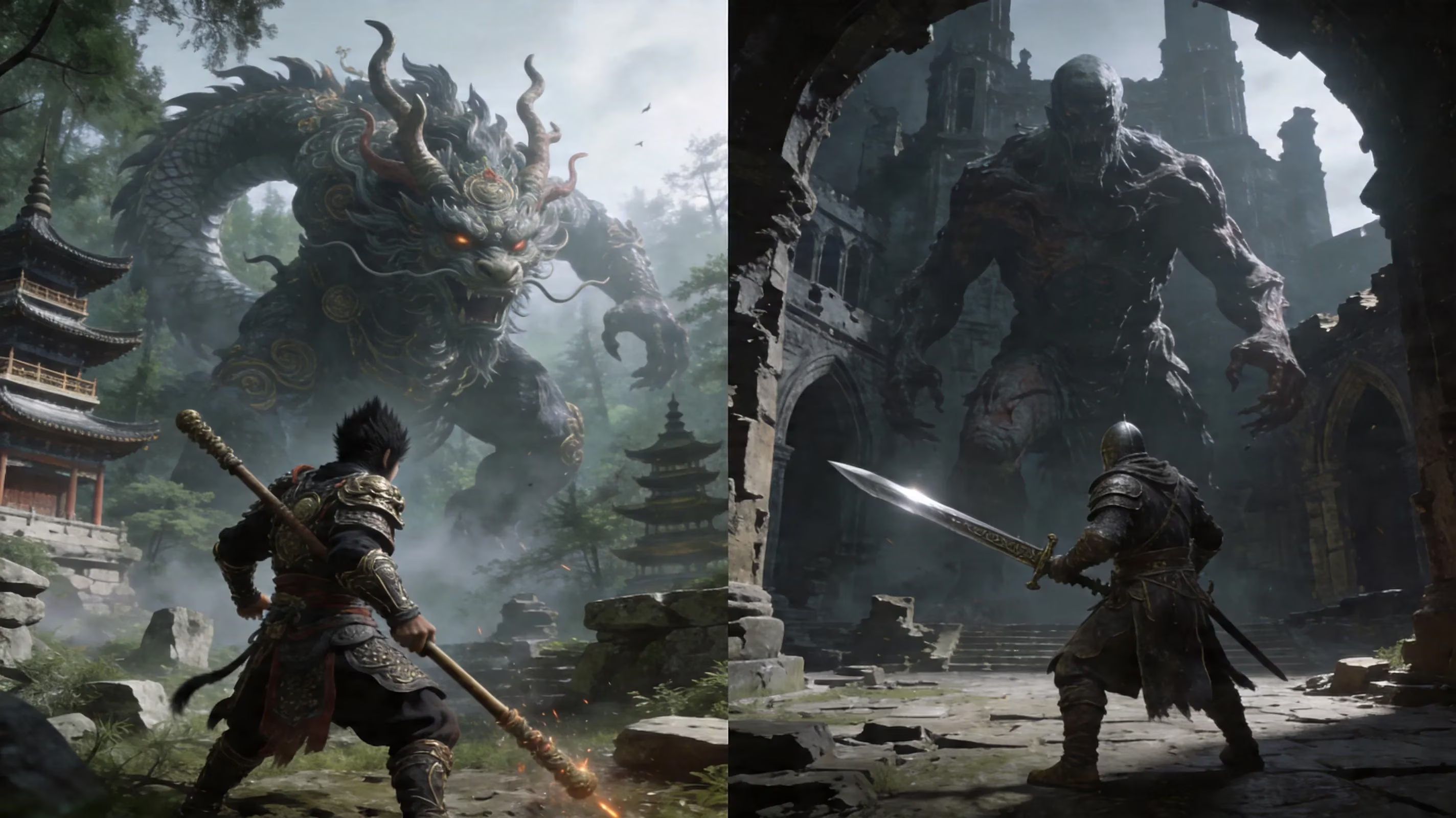
The base game versus DLC comparison matters too. Wukong gets noticeably tougher in Chapters 4 and 6, where bosses hit harder and ask for much cleaner execution than the opening stretch. Elden Ring also escalates, but Shadow of the Erdtree pushed that curve even further, with bosses like Messmer the Impaler and the DLC’s final encounter becoming major community pain points. By 2026, the broad player verdict leans toward Elden Ring being harder overall, especially if you count the DLC, while Wukong feels more concentrated and more punishing fight-to-fight.
| Difficulty Factor | Black Myth: Wukong | Elden Ring |
|---|---|---|
| Co-op / Summons Available | No | Yes |
| Open-world overlevel option | No | Yes |
| Fixed difficulty | Yes | Yes |
| DLC brutality | Moderate | Extreme (Shadow of the Erdtree) |
| Early-game filter | Aggressive | Gradual |
| Late-game spike | Significant | Severe |
Black Myth: Wukong vs Elden Ring Difficulty Breakdown
Once you look at the actual combat flow, the two games are hard in very different ways. Black Myth: Wukong is built around aggressive bosses that close distance quickly, chain long combos, and leave you with pretty slim punish windows. The Destined One’s dodge works, but the timing is tight, and if you miss it against bosses like Yellow Loong or Erlang Shen, you are often eating the whole sequence instead of just taking a small clip. There is no visible stamina bar, but the pressure is still there through cooldowns, spell usage, and transformation timing.
Elden Ring sticks closer to the classic Soulsborne formula. Rolling, attacking, and blocking all drain from the same stamina pool, so the tension comes from endurance and discipline over a longer exchange. It punishes greed too, just in a slower, more methodical way than Wukong does. Most base-game bosses give you slightly more readable dodge windows, though that changed a bit with Shadow of the Erdtree, where tracking, delayed swings, and aggressive hitboxes pushed things into much rougher territory.
Build freedom is another huge separator. Elden Ring lets you pivot hard if a boss is ruining your run — respec with Larval Tears, swap into bleed, go tankier, change weapons, rebuild your stat spread. Wukong has real customization, but it is not nearly as flexible in the middle of a playthrough. Your options revolve more around skill points, stance choices, and spell setups than full character reinvention. Exploration also changes how difficulty lands: Elden Ring can overwhelm you with too many directions and let you wander into areas you are not ready for, while Wukong’s linear structure keeps pushing you straight into the next skill check.
Black Myth: Wukong
Wukong’s linear progression is a big reason it feels so intense. Every major wall is basically a boss wall. In an open-world RPG, you can back off, farm, gear up, and come back later. Here, if a mandatory boss is stopping you, that is the roadblock. If Yellow Loong takes 40 or more attempts, there is no alternate route waiting around the corner. You have to learn the fight.
That said, the game does give you a strong toolkit. The three staff stances — Smash, Pillar, and Thrust — all change your timing, spacing, and pressure options in meaningful ways. Transformation spells like Red Tides or Wandering Wight can give you burst damage and brief invulnerability windows, and tools like Immobilize or vessel abilities can create badly needed breathing room. If you actually use the full kit, the game opens up. If you try to mash light attacks and hope for the best, the difficulty curve gets brutal fast.
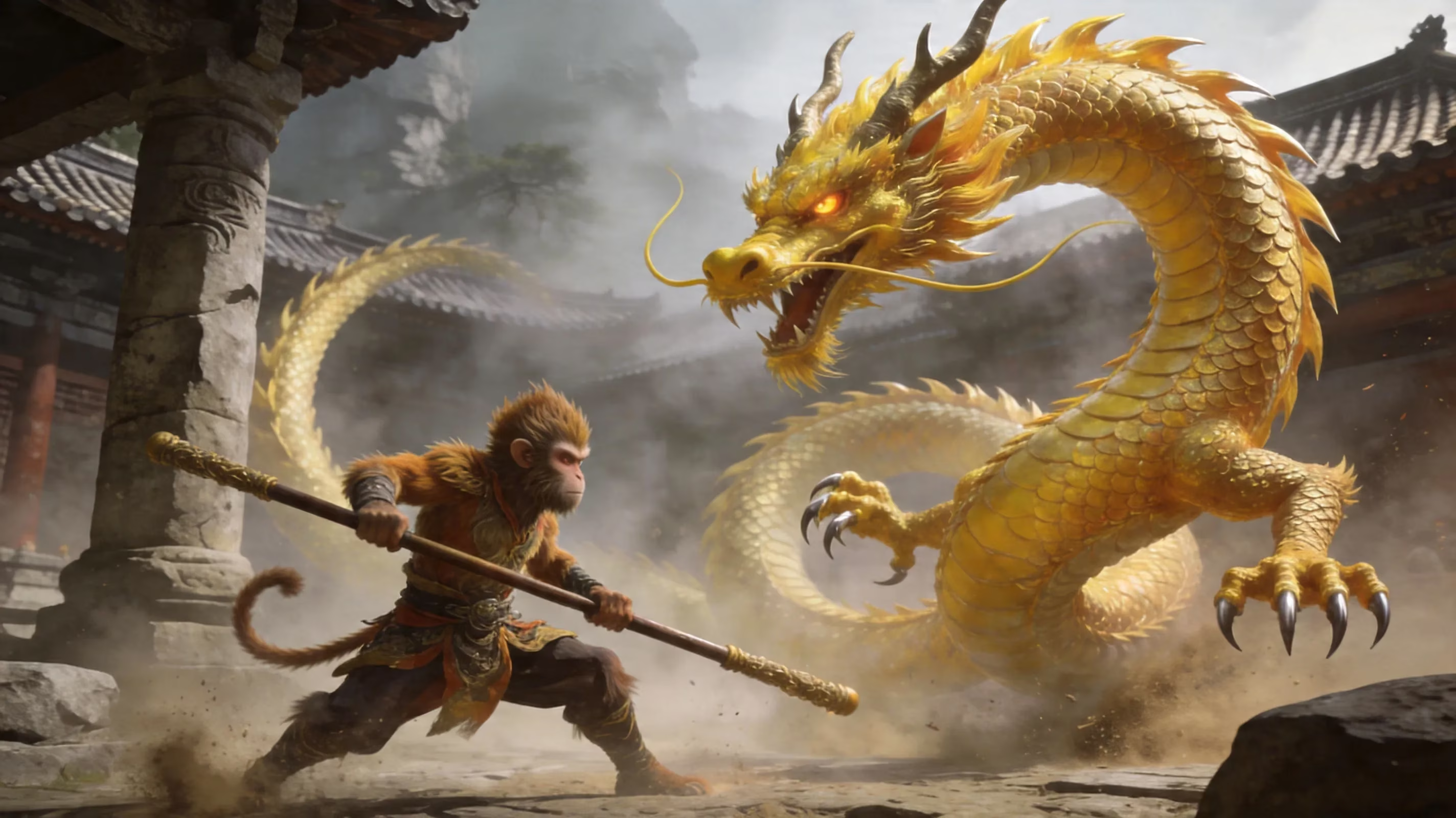
The whole experience is very boss-forward. There are more than 100 bosses and mini-bosses in the game, and while not all of them are equally demanding, the important story fights and hidden encounters like Yellow Loong are clearly built around repetition and learning. The upside is that Wukong usually feels deterministic. Bosses follow patterns, and with enough patience, you can read them, adapt, and break through. The downside is simple: that process can take a lot of attempts.
Elden Ring
Elden Ring has something Wukong never really offers: the freedom to walk away. If Margit is flattening you, you can hop on Torrent, roam through Limgrave, clear caves, find upgrade materials, gain levels, grab a better weapon, and come back much stronger. That option alone smooths out the early-game experience in a way Wukong deliberately avoids.
Then there are the assist systems. Spirit ashes like Mimic Tear or Black Knife Tiche can completely change the rhythm of a boss fight by splitting aggro and buying you time. Human co-op does something similar, even if boss HP scales up in return. If you are willing to use those systems, Elden Ring becomes far more manageable than its reputation might suggest.
Where Elden Ring really turns vicious is the late game and DLC. The Elden Beast, Malenia, Blade of Miquella, and much of the Shadow of the Erdtree roster sit among the hardest encounters FromSoftware has made. Malenia’s lifesteal and Scarlet Rot mechanics made her infamous for a reason, and Messmer brought a level of speed and pressure that caught even veteran players off guard. Add in the sheer size of the game world and the fatigue that comes with a long run, and it makes sense that a lot of players fell off before the finish line.
Which Game Feels Harder for Different Players
For Souls veterans, Wukong often feels harder at first. A lot of the habits that work in FromSoftware games — patient circling, measured stamina use, waiting for obvious punish windows — do not always translate cleanly into Wukong’s faster, more direct boss design. Even so, once DLC is included, many of these players still end up calling Elden Ring the tougher overall package. Wukong just tends to hit harder up front.
For action game players, the answer can flip. If your background is more Bayonetta, Devil May Cry, or God of War than Dark Souls, Wukong’s speed and combo-heavy flow often feel more natural. Elden Ring can come across as slower, stricter, and honestly a bit opaque until its stamina logic clicks. This group often sees Wukong as the smoother fit, even if they do not necessarily rank it as the harder game overall.
For complete beginners, Wukong is usually the rougher opening experience. Steam achievement trends showed a sharper early drop-off there than in Elden Ring, and that lines up with how the games are structured. Wukong does not really let you sidestep its first major tests. Elden Ring, on the other hand, gives new players more room to wander, level, experiment, and build confidence before hitting the nastiest fights.
For trophy hunters and NG+ players, the comparison changes again. Wukong’s platinum asks for specific collectibles and part of a New Game Plus run, while Elden Ring stretches completion across multiple endings and playthroughs, making it longer but usually less mechanically punishing on the grind side. NG+ boosts danger in both games, but because Wukong is so boss-focused, that extra damage and health can feel oppressive almost immediately.
Black Myth: Wukong Hardest Bosses vs Elden Ring Hardest Bosses
If you ask Wukong players about nightmare fights, Yellow Loong comes up almost every time. He is fast, hits absurdly hard, and mixes claw swipes, aerial dives, and thunder AoE pressure in a way that can delete underprepared players in seconds. By 2026, community tracking and player reports regularly put his average attempt count somewhere in the 30 to 50 range for people going in without a heavily optimized setup. Erlang Shen, especially as a secret boss, brings a different kind of stress. It is a multi-phase fight packed with counters, pressure, and awkward transitions that punish hesitation just as hard as greed.
Elden Ring’s side of the argument is stacked too. Malenia, Blade of Miquella is still the game’s most infamous wall, and probably the most discussed boss of the modern action-RPG era. Her lifesteal means every mistake matters, and Scarlet Rot only adds more pressure. Then you have Messmer the Impaler, who raised the aggression ceiling even higher in Shadow of the Erdtree with flame spear strings, tracking slams, and very little room to relax. The DLC’s final boss also became a major skill check that overwhelmed plenty of players who had handled the base game just fine.
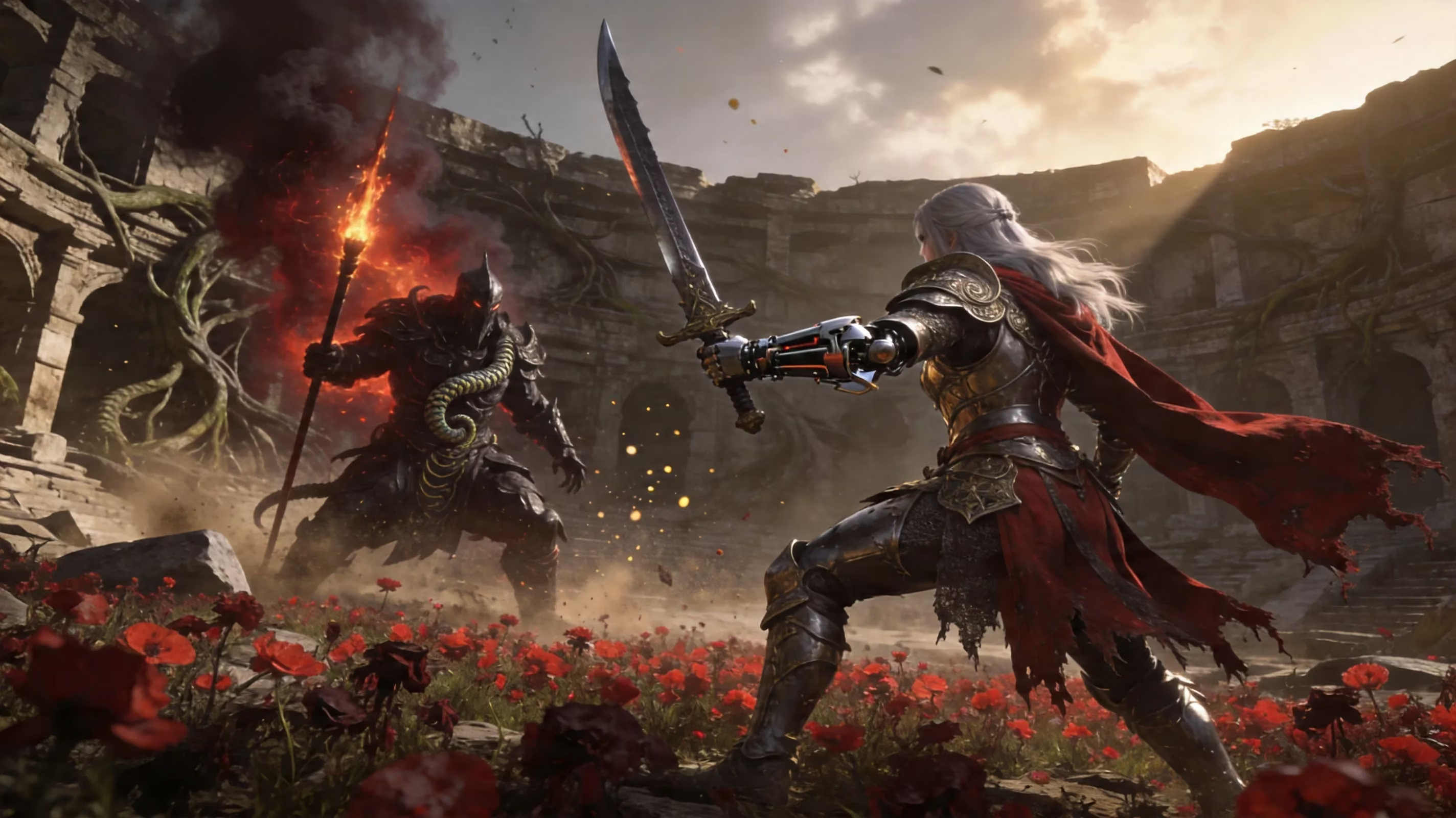
If we are talking raw attempts, Wukong’s hardest optional bosses and Elden Ring’s nastiest DLC fights live in a similar zone. Skilled players often report anywhere from 20 to 60 tries, with some going much higher. The bigger difference is how those deaths feel. Wukong usually comes across as more readable and more learnable because its patterns are fixed and consistent. Elden Ring, especially in the DLC, sometimes feels messier — less “I understand what I did wrong” and more “that tracking was ridiculous.”
Should You Play Black Myth: Wukong After Elden Ring
If you finished Elden Ring and want another demanding action RPG, Wukong is a very strong follow-up — just not for the exact same reasons. The best way to approach it is as a cinematic action game with serious boss difficulty, not as a one-to-one Soulslike replacement. That mindset helps a lot, especially once you realize there is no co-op safety net and much less room to rebuild your character around a single fight.
If your biggest issue with Elden Ring was getting lost, Wukong may honestly feel refreshing. Its chapter-based structure keeps the next objective clear, and that cuts out a lot of the navigation friction. You are not spending hours wondering whether you missed a cave three regions back. The challenge is right in front of you, which is great if you prefer focused progression.
If what you loved most about Elden Ring was buildcraft, though, Wukong may feel more limited. There is customization, and it matters, but it is working inside a tighter framework. You are not spending hours cooking up radically different stat spreads, weapon paths, or scaling setups the same way you can in Elden Ring. For some players that is a plus. For others, it is a real drawback.
From a buy-decision standpoint, the split is pretty straightforward:
-
Pick Black Myth: Wukong if you want a more focused, boss-heavy action RPG with strong narrative presentation, Chinese mythological flavor, and a tighter progression path.
-
Pick Elden Ring if you want deeper build variety, more replayability, and the freedom to control your own difficulty curve through exploration, summons, and respecs.
Conclusion
By 2026, the clearest answer to is black myth wukong harder than elden ring is that Elden Ring is harder overall, mainly because of its late-game demands and the sheer brutality of Shadow of the Erdtree. But that does not mean Wukong is the easier experience in every practical sense. In a lot of individual fights, it feels more immediate, more aggressive, and way less forgiving.
That is really the key distinction: harder is not always the same thing as harsher. Wukong is harsher in the moment — faster bosses, fewer escape valves, no summon safety net, and mandatory walls you cannot route around. Elden Ring is harder in the broader, long-haul sense, asking for more system knowledge, more endurance, and more adaptability across a much bigger adventure.
So which one fits you better comes down to taste. If you want a focused gauntlet with spectacular bosses and a strong mythological identity, Black Myth: Wukong is an easy recommendation. If you want a massive world full of buildcraft, experimentation, and some of the toughest endgame content in the genre, Elden Ring is still the benchmark. Happy gaming, Destined Ones.