
Black Myth: Wukong Review Scores and Gameplay Analysis
Black Myth: Wukong, a landmark Chinese AAA game, delivers a spectacular and polished souls-like action-adventure experience with its legendary Journey to the West adaptation.
In the landscape of 2026, the release of Black Myth: Wukong by Game Science continues to be remembered as a landmark moment for Chinese-developed AAA games. Back in August 2024, the highly anticipated action-RPG finally arrived, allowing players to embody the legendary Monkey King on his epic Journey to the West. The final pre-launch trailer had already showcased Wukong's spectacular transformations and a daunting roster of bosses, building immense hype. A free benchmarking tool released on Steam let players optimize their settings for the best possible experience. Yet, the ultimate question remained: would the game live up to its promise? The answer came in the form of a wave of review scores, which painted a largely positive and promising picture for this ambitious adaptation.
A Roundup of Critical Reception
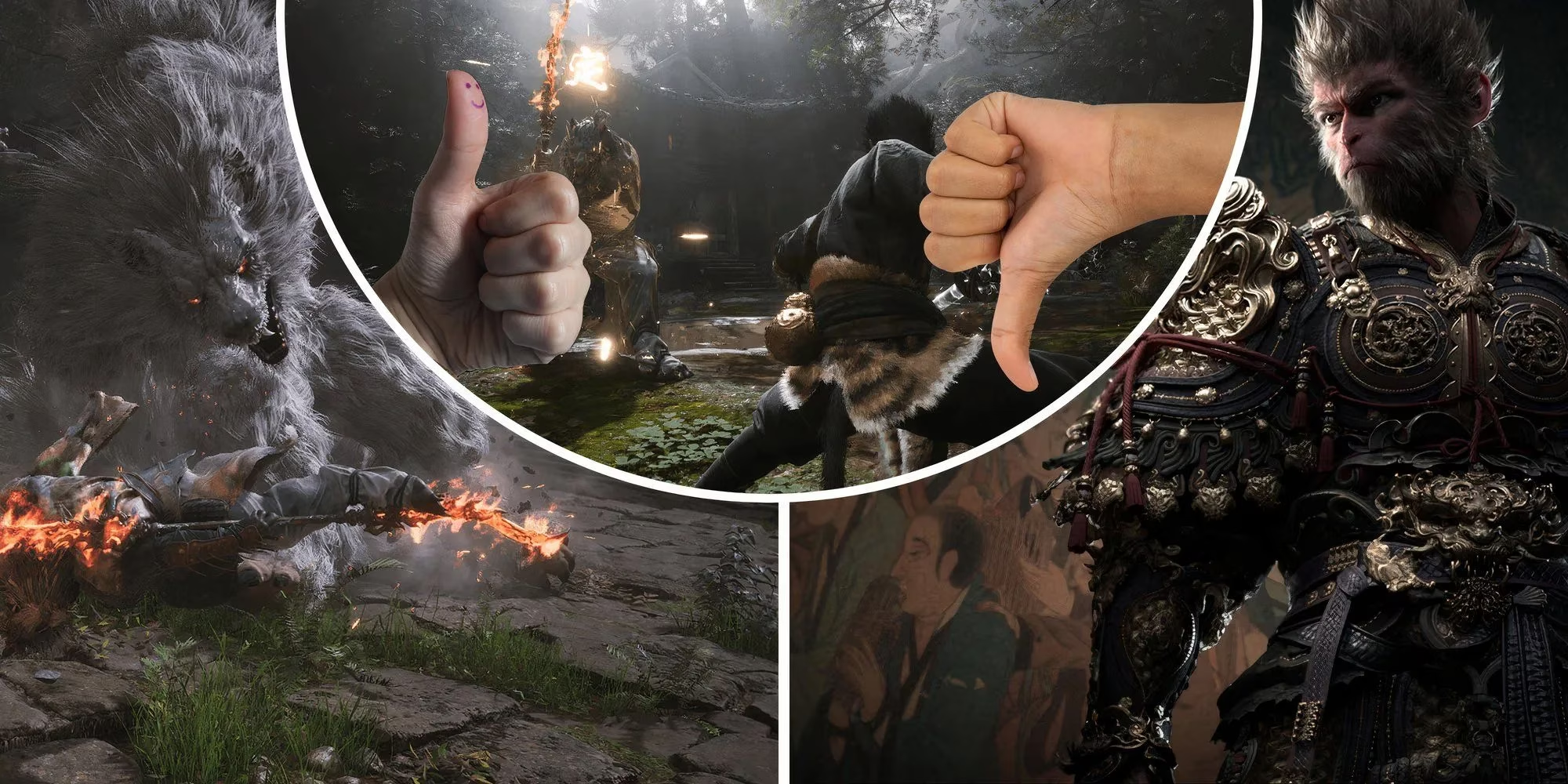
The critical consensus from major publications was overwhelmingly favorable. The game secured a robust aggregate score of 88 on OpenCritic and an 83 on Metacritic, signaling strong approval from the gaming press. Notably, most reviews fell well above the 75-point mark. Joshua Robertson from The Gamer offered high praise, stating the game was "the most polished, intricate, and entertaining souls-like outside FromSoftware's portfolio." This sentiment echoed widely, positioning Black Myth: Wukong as a standout title in the post-FromSoftware "souls-like" genre. However, not every review was a rave. A notable dissenting voice came from GameRant's Dalton Cooper, who awarded it a 3/5. His critique was measured, suggesting that while the game was "far from the best in the genre, it's also not the worst game that has followed Dark Souls' footsteps." This spectrum of opinion highlighted that the game, while successful, invited specific comparisons to its genre forebears.
Gameplay Identity: Action-Adventure with Souls-like Inspirations
A key point of discussion across reviews was the game's precise genre identity. While heavily marketed and discussed as a "souls-like," critics consistently noted that Black Myth: Wukong often plays more like a traditional action-adventure game. It doesn't slavishly replicate the formula established by FromSoftware. Instead, it integrates select core mechanics—like demanding boss fights that require players to learn attack patterns and movements—into a different structural framework. For hardcore fans of titles like Dark Souls or Elden Ring, this distinction was significant. The game encourages the strategic observation and mastery found in soulslikes but wraps it in a different package.
Examining the Level Design and World Structure
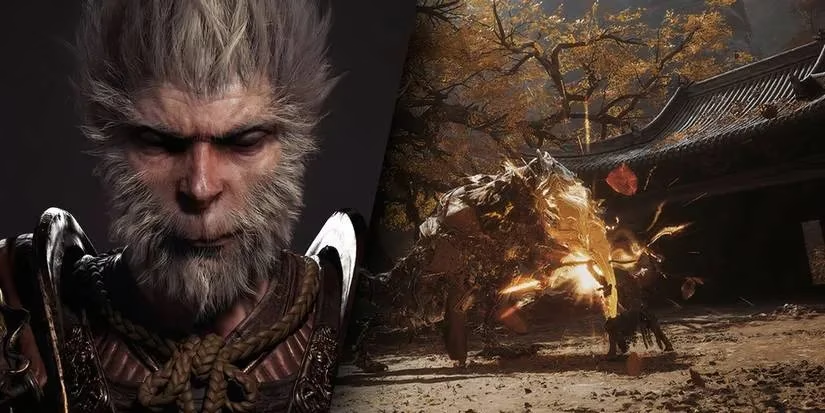
Perhaps the most debated aspect was the game's approach to world design. A hallmark of many soulslikes is an interconnected, labyrinthine level design that rewards exploration with shortcuts and hidden secrets. Black Myth: Wukong consciously diverges from this path. Reviewers pointed out that the game features a more linear level design, placing players in large, expansive areas ripe for exploration. This choice allowed Game Science to craft distinct, visually stunning environments drawn from Chinese mythology. However, this design came with a frequently cited drawback: the lack of an in-game map. Critics found that navigating these large, sometimes confusing areas without mapping tools could lead to frustration, interrupting the flow of exploration and combat. This design decision made it clear that the developer's primary goal was to faithfully encapsulate the epic Chinese folklore into a compelling action-adventure format, using souls-like elements as inspiration rather than as a strict blueprint. In this regard, most agreed the studio achieved its objective, even if the execution of its exploration elements was imperfect.
Legacy and Positioning in the Genre
Looking back from 2026, Black Myth: Wukong is seen not as a pure souls-like clone, but as a successful hybrid. It carved its own niche by prioritizing cinematic, mythology-driven storytelling and spectacular boss encounters over the interconnected world design of its inspirations. It proved that a game could borrow the satisfying, high-stakes combat of the genre while building a different kind of adventure around it. It joined the ranks of successful non-FromSoftware takes on the formula, like Lies of P, but with a distinctly different focus. The game's strong review scores and commercial success upon its release on August 20th for PC and PlayStation 5 demonstrated a hungry audience for high-quality, culturally rich action games. It stood as a testament to the fact that a game could honor the challenge and depth of soulslikes while marching to the beat of its own drum—or in this case, the journey of its own legendary staff-wielding hero.