
Black Myth Wukong Review: Spectacular Boss Fights Buoy a Hollow and Frustrating Journey
Black Myth: Wukong, Game Science's Journey to the West action game, dazzles in boss fights but suffers from convoluted navigation and uneven pacing.
Black Myth: Wukong arrives as one of the most audacious action games of its generation, reimagining the classic Chinese epic Journey to the West through the eyes of the silent but deadly Destined One. Developed and published by Game Science, this mythological retelling has long dazzled audiences with promises of high-end technical mastery and sumptuous visual artistry. Now, after spending over forty hours retracing the steps of its simian hero, the experience reveals itself as a contradictory spectacle—one that thrills intensely during its grand encounters but often stumbles when the cinematic thunder fades.
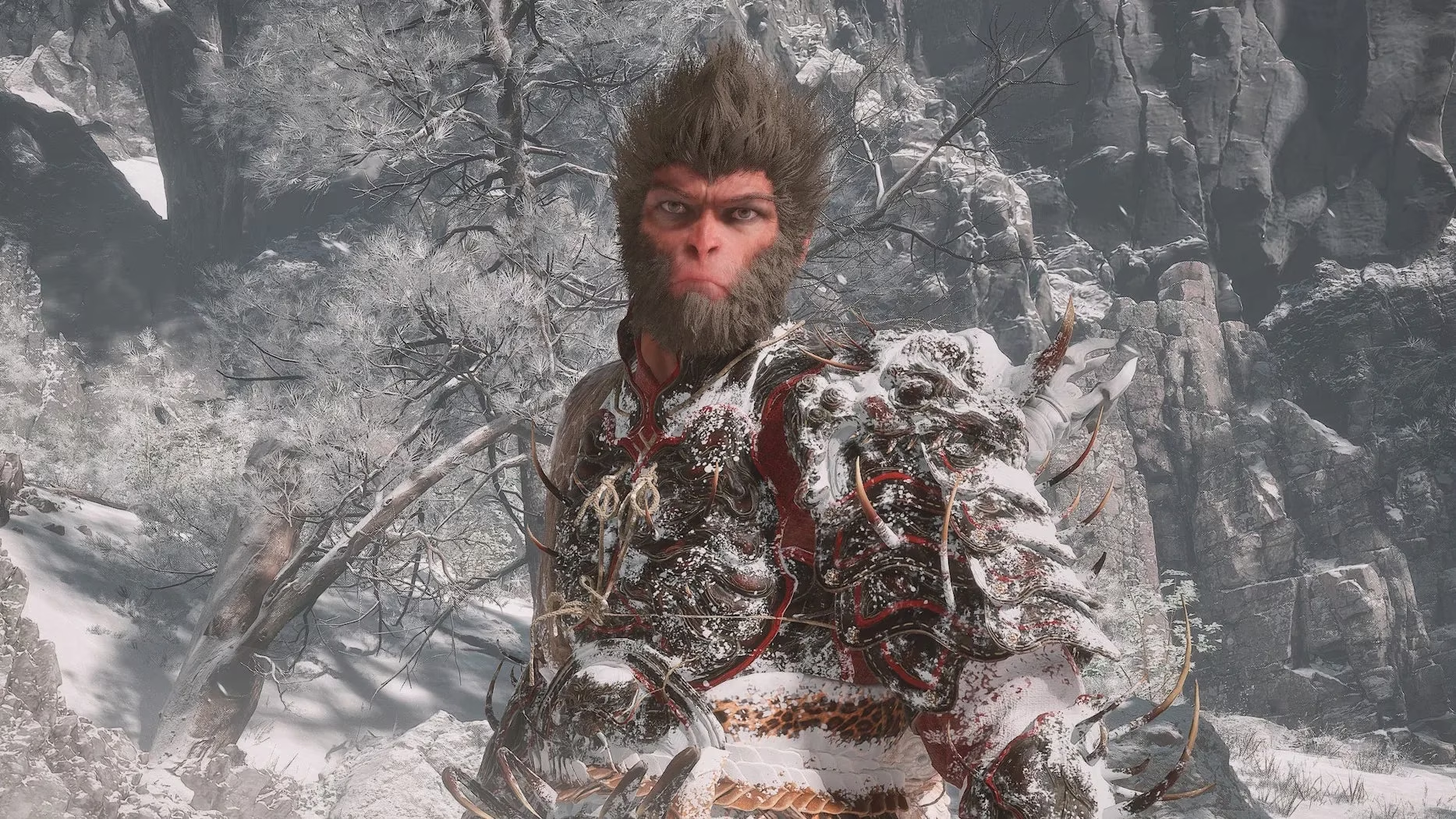
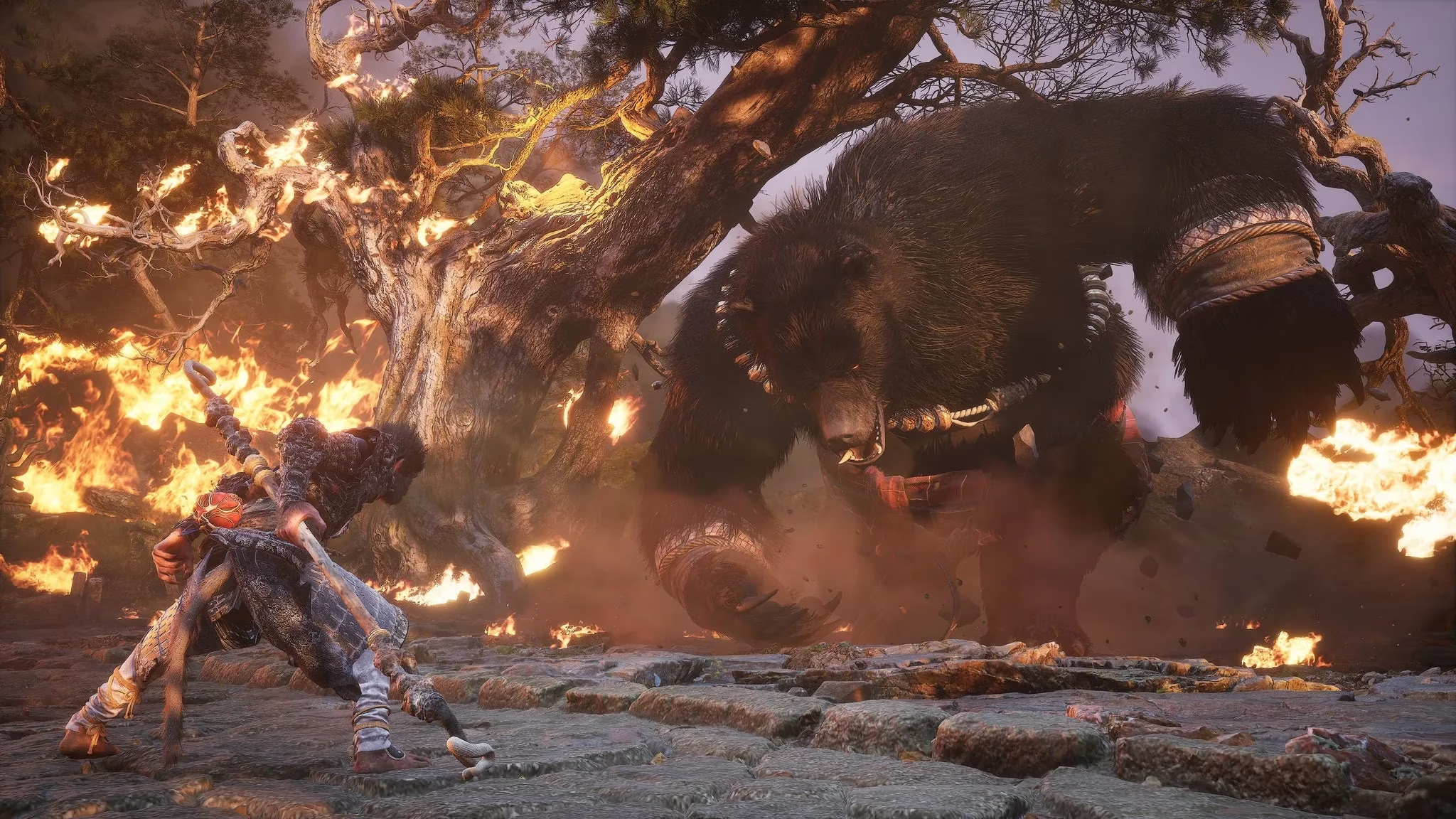
The game's most reliable source of excitement comes from its plentiful supply of sweeping, larger-than-life boss fights. Whether dueling glistening dragons that rage across icy lakes, confronting muscular tigers that sup in temples of blood, or surviving the elemental fury of giant bears, wolves, rats, and spiders, these encounters bristle with a malicious energy reminiscent of the finest soulslike antagonists. Their sharp claws, vicious fangs, and powerful hoofs tear across the screen in exquisite detail, and many of these battles feel destined to stand among the most dramatic of the current gaming epoch. The camera frames these clashes with tense desperation, allowing the player to weave through showers of lightning, icy squalls, and open jaws while savoring every pulse-racing moment.
Outside those exhilarating duels, however, Black Myth frequently sinks into a far more mind-numbing rhythm. The narrative follows a straightforward premise—recover six relics scattered by the legendary Sun Wukong after his defeat centuries earlier—but the execution is jarring. One moment the Destined One finishes a bruising fight with a flaming bear atop a hill; the next he lies half-dead in a desert with a chest full of arrows, bereft of any context explaining the transition. This hands-off storytelling slams the brakes on catharsis and repeatedly halts narrative momentum. Later chapters compound the issue by introducing a boorish companion whose constant belittling remarks test the limits of patience.
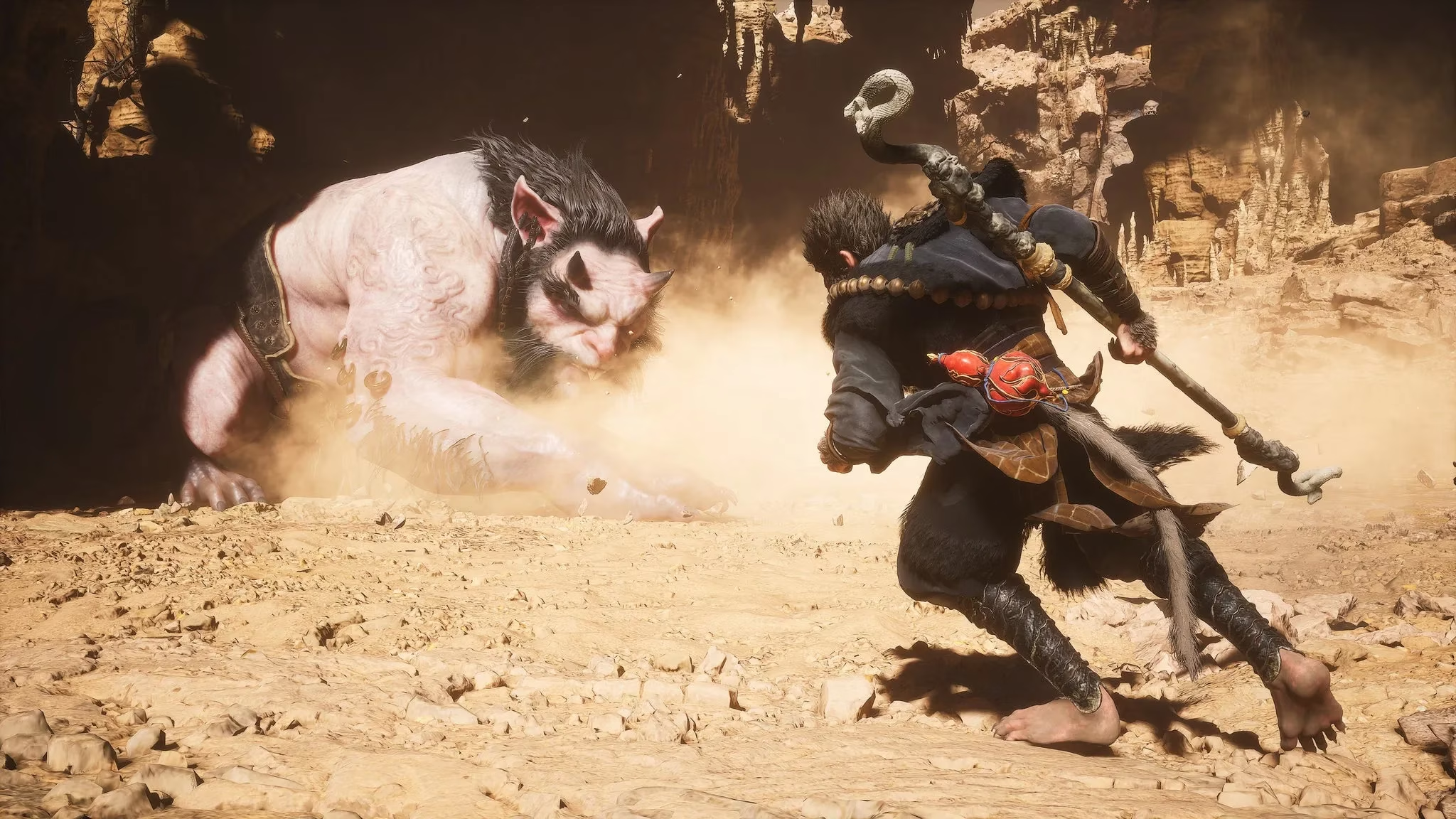
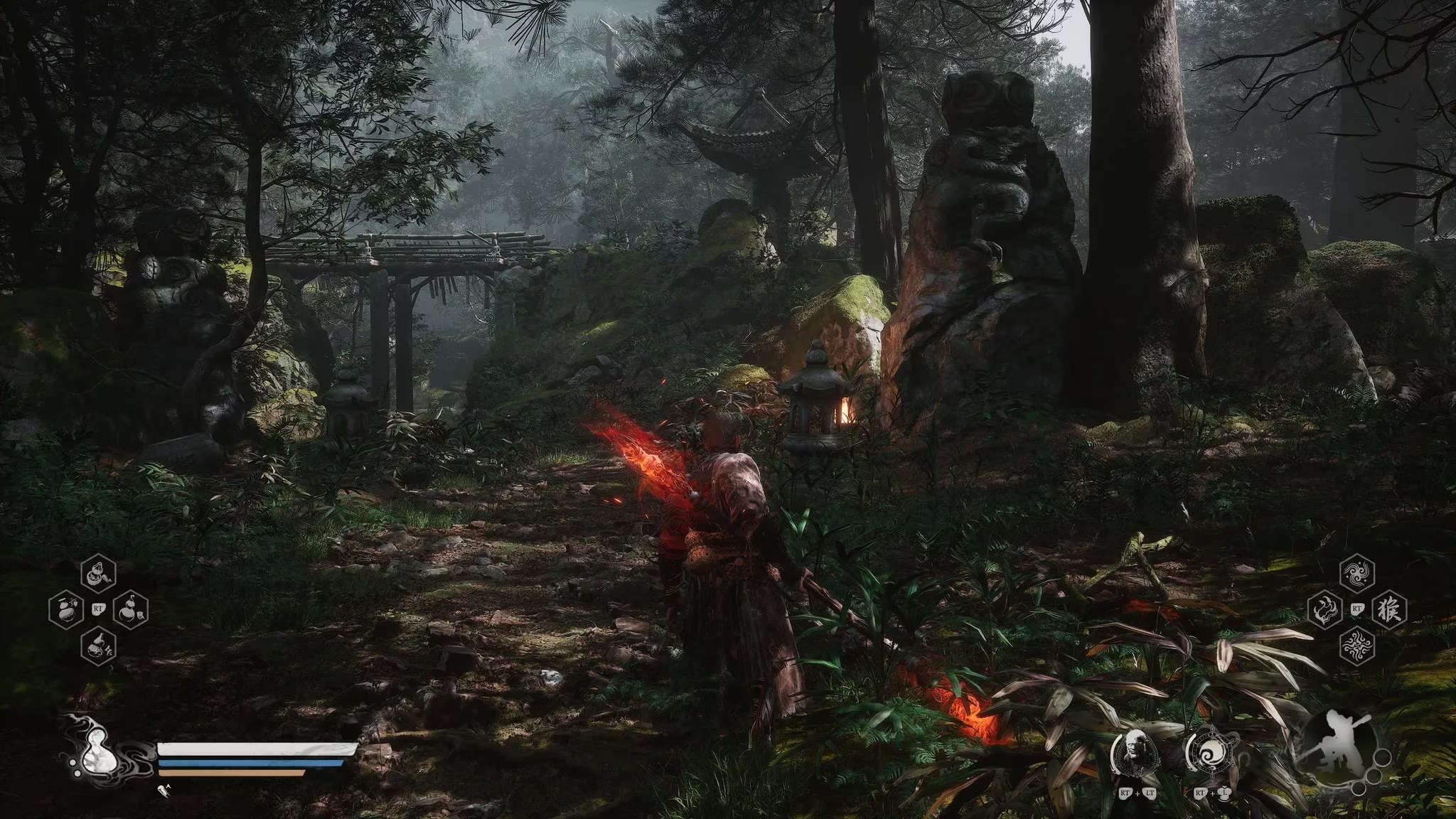
The environment design amplifies these frustrations. Forgoing a map and compass, the game lets its pursuit of realism run wild, producing beautiful but frequently confounding sprawls that turn basic navigation into a chore. One dusty ravine resembles another, dead-ends proliferate, and the absence of vertical landmarks makes interconnected passageways hard to hold in memory. Invisible walls add further irritation, cordoning off poorly defined edges while preventing even the smallest rock from being climbed. The world lacks the compositional eye that would frame its lush environments in a friendlier, more curious light. Consequently, the player rarely moves forward out of story motivation or sidetracked curiosity; instead, progress often feels like a directionless trudge—an odd irony for a game based on a journey.
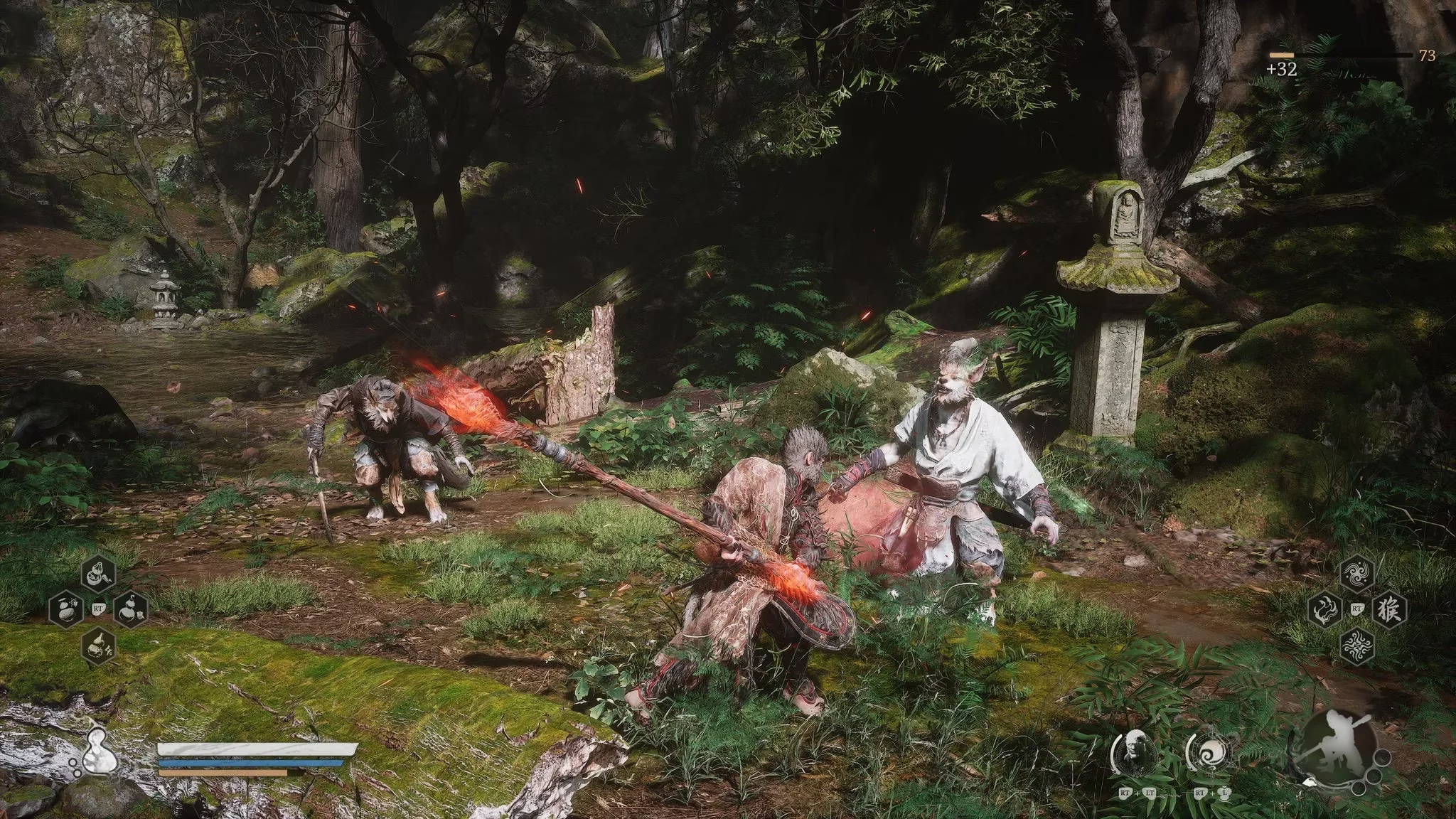
The ordinary enemies between boss fights further deflate momentum. The so-called Lesser Yaoguai demons live up to their name visually but not mechanically; they are easily dispatched with rapid button mashing and quickly become little more than punching bags. Many unique foes do not respawn after death, leaving environments increasingly empty and making grinding for difficult boss encounters feel laborious. While the game's difficulty is reasonably pitched overall, certain end-of-chapter battles provoke truly despairing spikes. Victims of these moments may endure spongy health bars reminiscent of the most punishing endurance tests in Elden Ring, feeling less like a proto monkey god and more like a mouse wielding a toothpick. At least death is merciful—the in-game currency and unspent skill points are retained, softening the sting of repeated failure.
The combat system itself oscillates between spectacle and shallowness. The Destined One shares more DNA with Kratos or Bayonetta than with the Tarnished of FromSoftware, favoring rapid brute-force button mashing and pitch-perfect dodging over cautious shield play. Multiple skill trees allow free re-specing at shrines, but many upgrades offer meager stat boosts rather than fundamental changes, echoing the pre-2.0 flaws of Cyberpunk 2077. Alternate staff stances alter only the execution of heavy attacks, which require accumulated focus points and stamina. Bosses show no particular susceptibility to any stance, leaving the player little choice but to keep mashing the same button while waiting for the flashy finishers to land.
The spells, by contrast, represent Black Myth at its most entertaining. The signature Immobilise spell freezes enemies in place, inviting the player to pile on damage for a limited window. Transformation spells, though few in number, allow the Destined One to fight in the guise of other demons, each equipped with unique light, heavy, and special attacks and—crucially—a separate health bar that can prove a lifeline in tough boss battles. Unfortunately, these joys are tempered by awkward controls and punishing resource management. Trigger buttons shoulder too much responsibility, with spells, spirit summons, and projectile-deflecting staff twirls all mapped to various trigger combinations. Spells carry painfully long cooldowns and draw from a limited mana pool that rarely replenishes outside shrine rest, meaning a mistimed cast can be devastating.
Accessibility features provide some relief, including three colorblind modes with intensity sliders, customizable key bindings, two gamepad profiles, adjustable camera sensitivity and shake, motion blur toggles, and independent volume sliders for music, effects, and dialogue. English and Chinese voice options are available, alongside twelve subtitle languages.
Ultimately, Black Myth: Wukong is a game of glittering highs and profound hollows. Its spectacular boss roster can momentarily erase memories of hours spent groping through directionless landscapes or cursing at cheap difficulty spikes. Yet the glitz and glamour only paper over the cracks for so long. The unpleasant supporting cast, muddled environments, simplistic combat, and disjointed storytelling combine to undermine the power fantasy at its core. By the journey's end, one may rightly wonder whether the abbreviated pilgrimage was worth making at all. For those seeking dramatic, screen-filling boss encounters, Black Myth delivers unforgettable spectacle. But players craving depth, narrative coherence, or navigational clarity would be better served looking elsewhere.