
Black Myth: Wukong's Ray-Traced Glory: A 2026 Reflections
Black Myth: Wukong's ray tracing and DLSS elevate Unreal Engine 5 visuals, making every transformation a luminous spectacle.
Let’s be honest—when I first saw that jaw‑dropping 4K teaser of Black Myth: Wukong back in the early 2020s, my GPU hyperventilated. Not from fear, but from sheer anticipation. Fast forward to 2026, and here I am, still catching my breath every time I boot up Game Science’s magnum opus. The promise of ray‑traced splendor and DLSS wizardry wasn’t just a glossy tech demo; it became the spine of one of the most visually hypnotic action RPGs ever forged in Unreal Engine 5.
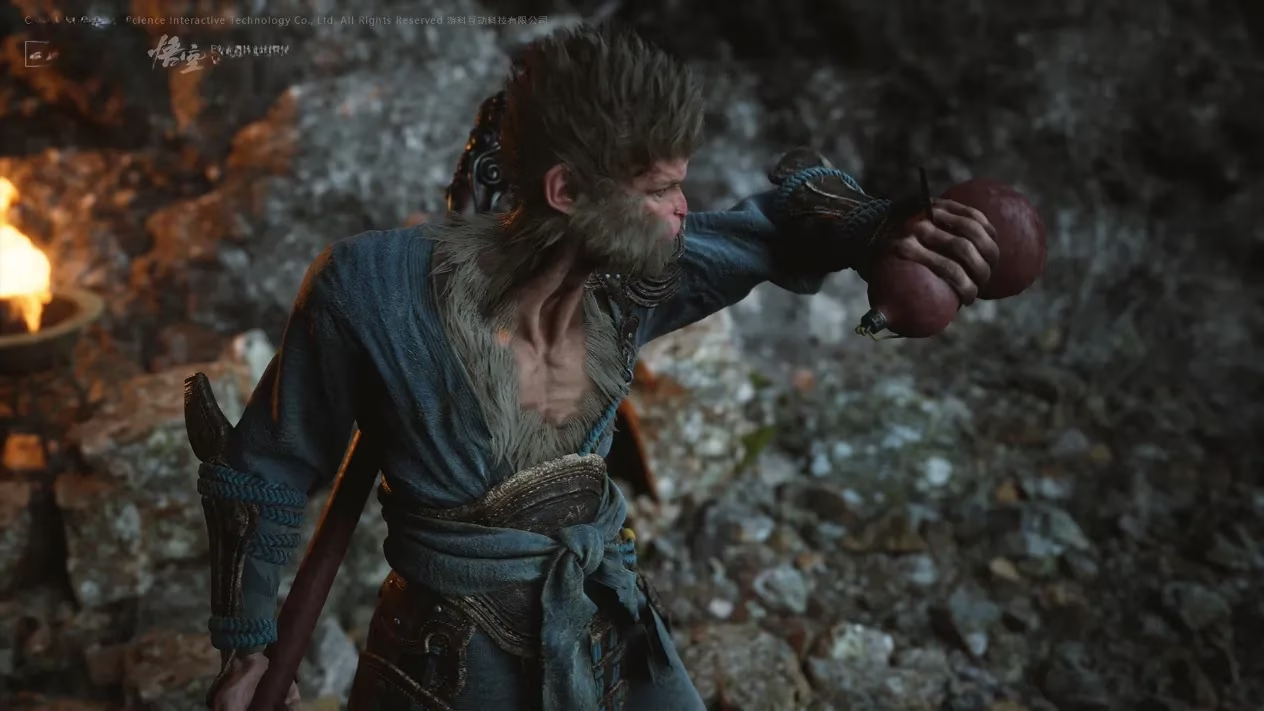
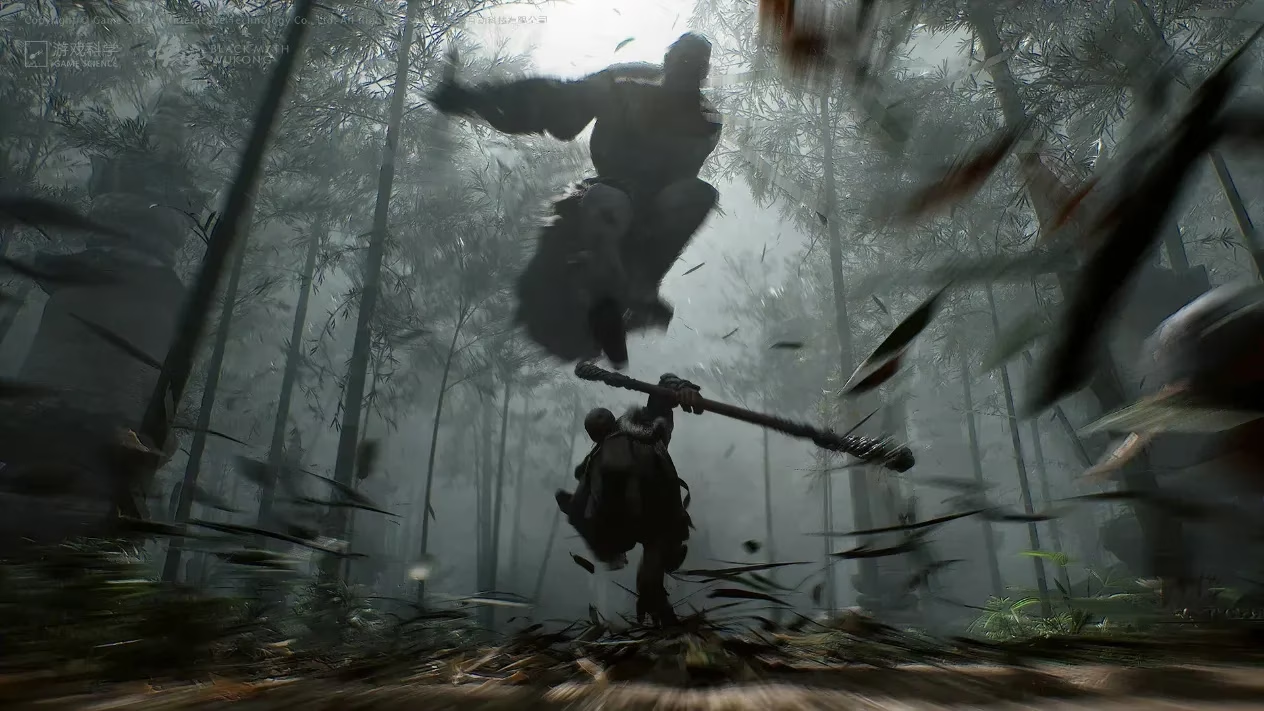
The first thing that still punches me in the retinas is the lighting. Ray tracing here isn’t just a checkbox—it’s the game’s silent storyteller, a phosphorescent orchestra conducting every leaf, puddle, and fang. Imagine walking through a bamboo grove where each shaft of sunlight doesn’t merely illuminate but sculpts the fog; where the rippling reflection in a monster’s armour tells you it’s time to roll sideways. That’s the kind of detail that turns a quiet exploration moment into a visual sonnet. And thanks to Nvidia DLSS, the performance hums like a well‑fed tiger, even in 8K on my rig with every slider cranked to “make my electricity bill weep.”
DLSS itself feels like a digital alchemist that transmutes raw frame‑buffer noise into silky‑smooth gold. Without it, I’d be staring at a PowerPoint slideshow during the Whiteclad Noble’s water‑whip dance. With it, I can count the droplets on his robe while dodging like a caffeinated squirrel. It’s the unsung hero that lets the Monkey King’s fur physics and particle‑heavy transformations shine without turning my PC into a space heater.
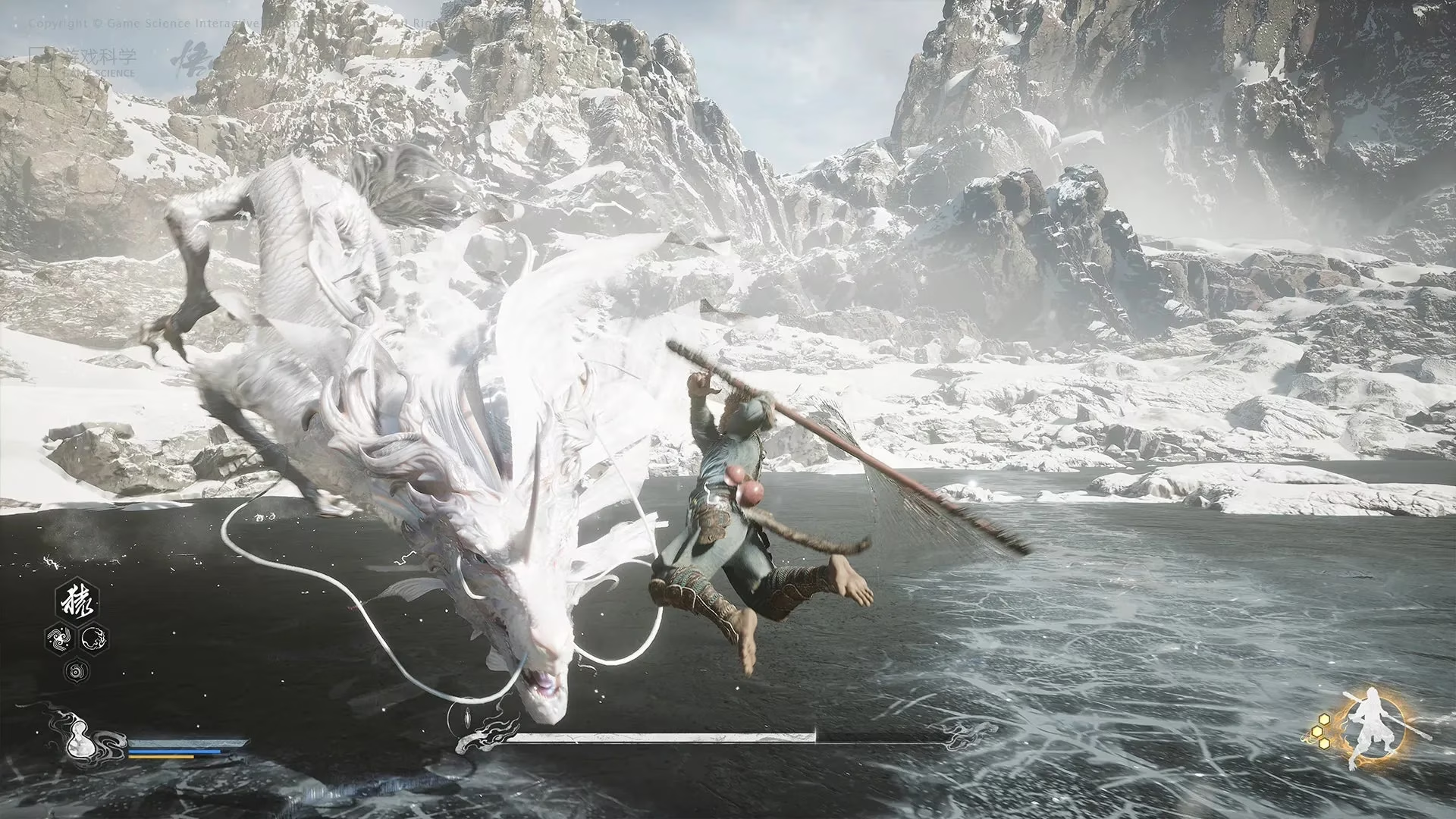
Speaking of transformations—turning into a cicada or a hulking stone giant is no mere gimmick. It’s a narrative kaleidoscope that re‑frames combat and exploration every ten minutes. In the 2024 launch version (and the subsequent free expansions up to 2026), these abilities are layered with RT‑accelerated effects that make each metamorphosis feel like a VFX triumph. When I shrink into an insect, the world becomes a celluloid macro‑lens fever dream where dew drops magnify distant threats. When I erupt into a titanic rock behemoth, the ground cracks with dynamically lit subsurface scattering—my punches leave behind glowing fissures that gradually cool from magma‑orange to charcoal‑black. It’s a geological tantrum rendered in real time.
Combat, too, has evolved beyond the early trailers. Those spine‑staff clanks now sound like a blacksmith’s lullaby, and every dodge carries a phantom‑afterimage trail that RT shadows paint across ancient temple floors. Enemies, from the lowliest yaoguai to the towering four‑faced god, exploit the lighting to ambush you. I still remember a lurking wolf demon in the Flaming Mountains whose fur caught the ember‑glow like a living furnace—a thermo‑biological clock that telegraphed its charge attack. Spotting that tiny visual cue saved my staff‑wielding hide more times than I’d care to admit.
Now, in 2026, the game runs on everything from a PlayStation 5 Pro to a handheld PC like the Steam Deck 2, thanks to forward‑thinking optimization. The move from UE4 to UE5 wasn’t just about bigger worlds—it birthed a Lumen‑powered ecosystem where even the most cramped crypts feel alive with bouncing light. And with DLSS 4 integration rolling out earlier this year, performance modes now deliver image quality that rivals native rendering while hovering at a buttery 120 fps. My inner graphics nerd weeps tears of liquid silicon.
But visual bravado alone doesn’t make a masterpiece. It’s how the tech serves the myth. Journey to the West’s 16th‑century prose feels reborn in every pixel‑perfect temple mural, every shimmering thread on Wukong’s robe. The world isn’t just pretty; it’s archaeologically dense—an environmental poem written in RT‑accelerated hieroglyphics.
So, if you’re peeping at this 4K trailer from 2023 and wondering if the final product delivered, let me crush your doubts like a boulder‑morphing monkey. It over‑delivered. Black Myth: Wukong in 2026 is not just a game you play; it’s an art gallery you fight through, a tech demo you get emotionally invested in, and a prime example of how ray tracing and DLSS can transcend marketing jargon and become genuine tools of immersion. Go ahead—let your GPU sing its photonic opera. The Monkey King is still waiting.