
Fleeting Wings and Borrowed Flame: A Cicada’s Song in Black Myth Wukong
Black Myth Wukong's fleeting Golden Cicada spell lets you slip past the Wandering Wight, then the wolf-monk fight teaches metamorphosis.
I still remember the moment the dwarf’s chant folded me into a whisper of gold. The Forest of Wolves stretched before me like a bruised velvet curtain, its shadows stitched with the heavy footsteps of a titan. The Keeper of Black Wind Mountain did not give me wings but an entire forgotten language—my body dissolved into a cocoon of light, and I emerged as a Golden Cicada, no larger than a tear, yet holding the whole sky within the beat of two translucent veils.
In that shape, the world became a cathedral of scent and tremor. I drifted over moss and root as if I were a single note plucked from an ancient sutra, too small for anger, too fleeting for harm. Below me, the Wandering Wight paced like a sorrowful mountain that had misplaced its purpose. His steps were slow earthquakes; his breath fogged the air like a wounded glacier sighing. To him, I was less than a dust mote—a tiny spell suspended in the amber of a summer afternoon. This was the only time the game gifted me such fragile ascendancy: a one-time enchantment that taught me how to thread through the eye of danger without breaking the needle.
I have no name for the feeling of being that cicada, but I will try. It was as if I had become the shadow of a falling petal, something so insignificant that even fate forgot to step on it. I crossed the woodland path like a held breath, watching the Wandering Wight turn his colossal back. At that instant, I understood the ancient wisdom of the trickster: survival is not always a battle. Sometimes it is a piece of silk sliding between two swords, untouched by either.
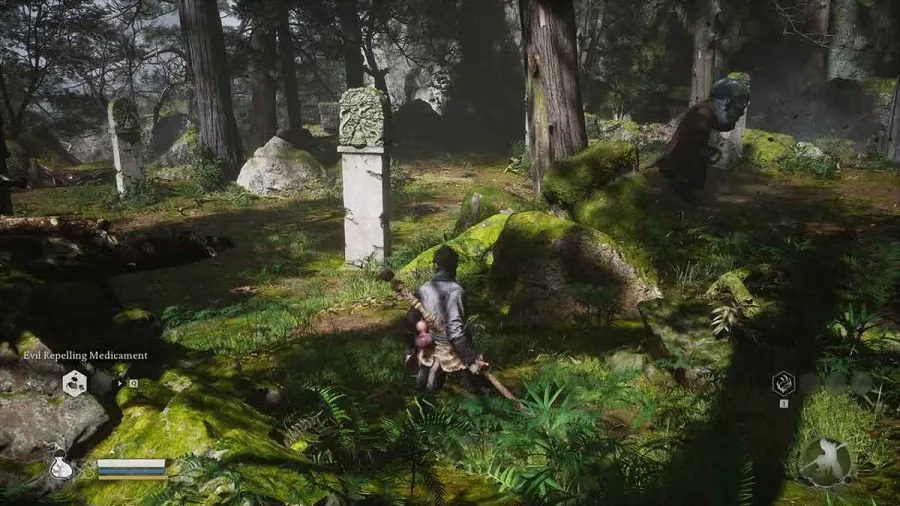
The charm broke without warning—a soft chime, and I was again the simian pilgrim, rough-furred and heavy-boned. My wings had fallen away like a season that would never return. I tried to reclaim the cicada form at the shrine, to respawn into that golden stillness, but the game had already closed the door. The spell was a gift given only once, a fleeting poem written on water. And I mourned it as one mourns a childhood dream that slips through the fingers upon waking. This loss is not a glitch; it is the game’s first lesson in impermanence. The cicada was a borrowed thread of heaven, and I had no right to weave it again.
Yet Black Myth Wukong does not leave you without metamorphosis. Soon, I veered from the main path, drawn by a low hum that felt older than the trees. In a clearing suffocated by silence, I found Guangzhi—a towering wolf-monk frozen in eternal meditation, his fur the colour of burnt prophecy. He did not speak, but his presence roared. A fight with Guangzhi is not a duel; it is a conversation with a wildfire. His polearm carved arcs of red through the air as if the sunset itself had been sharpened into a blade. Every strike was a phrase from a forgotten war chant, every block a pulse in a drum made of my own heartbeat.
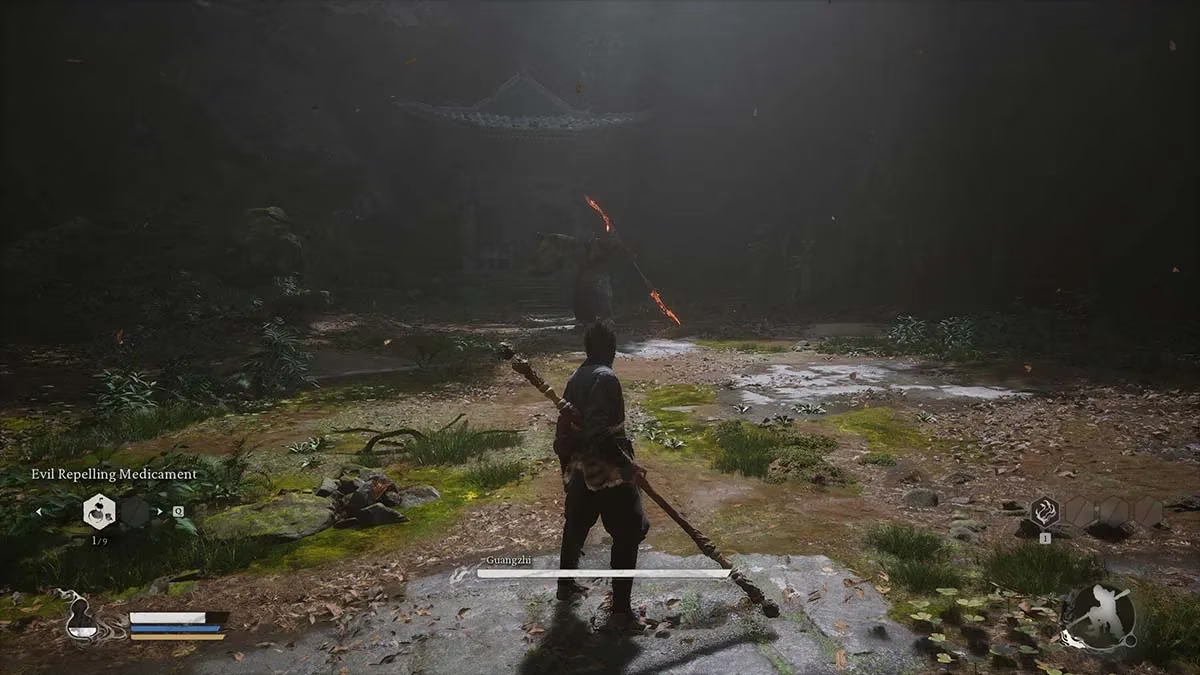
I fell many times, each death a smudge of ink on a half-finished scroll. But when I finally read the rhythm of his attacks—the pause before the lunge, the exhale after the spin—the victory felt less like triumph and more like understanding a new dialect of violence. From his fading form, I plucked the weapon that would become my second skin: a glaive etched with embers, its edge singing the colour of dried blood. And with it came the Red Tides spell, a transformation that let me borrow Guangzhi’s shape. When I cast it, my bones crackled into a different geometry; I became the wolf, the night prowler, the crimson-trimmed dancer. In that borrowed body, I wielded his techniques as if they were verses I had always known but only now remembered.
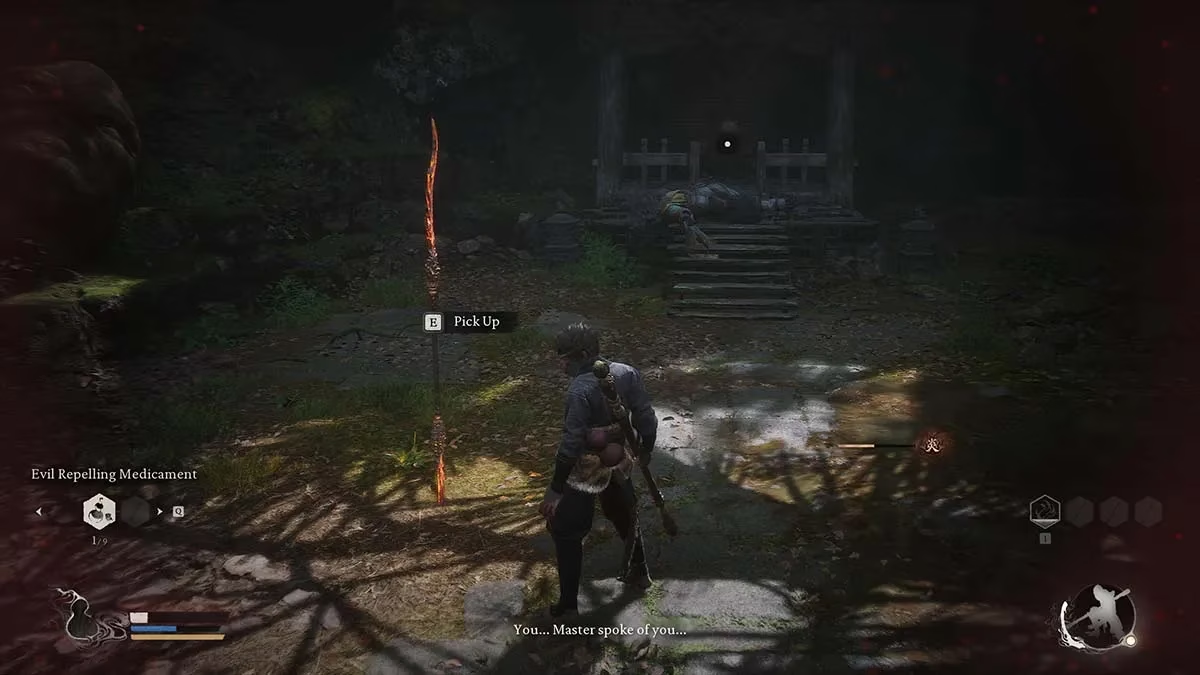
The shift from cicada to wolf is one of the most sublime curves in this journey. The cicada was a riddle of absence—a way to not be there. The wolf is a proclamation of presence—a way to fill the space with fury and flame. I think of these two shapes as twin mirrors: one reflects a soul so light it almost forgets gravity; the other reflects a soul so heavy it leaves footprints in stone. And I, the pilgrim, learned to hold both, but never at the same time. This is the quiet tragedy that Black Myth Wukong whispers into every transformation: you may wear many skins, but you can never wear them all at once.
Two years have passed since the game first opened its doors in 2024, and even now, in 2026, I walk through that forest in memory. The Wandering Wight still strides in my peripheral dreams, and Guangzhi’s glaive still glints behind my eyelids. I no longer mourn the lost cicada form; instead, I cherish it as one cherishes a perfect dawn that will never be repeated. The Red Tides spell, meanwhile, has become a faithful companion, reminding me that power can be borrowed, shaped, and eventually returned to the earth.
What remains is a poetic truth: in a world where you must constantly become something else to survive, the most radical act is to stay still inside yourself—even if just for a breath, even if just as the fragile echo of a cicada’s wing.