
Steam’s Concurrent User Record Surges Past 44 Million in 2026 Driven by China’s Gaming Wave
Steam's new 44.2M concurrent user record, fueled by Chinese AAA titles, saw 14M in-game simultaneously.
Steam has once again rewritten the history books, and this time the numbers are almost too big to grasp. In early February 2026, Valve’s digital storefront shattered its own world record by logging over 44.2 million concurrent users. For those keeping score at home, that’s roughly the entire population of a country like Argentina logged in at the same moment, browsing libraries, updating clients, and most importantly, playing games. The old high-water mark of 37.2 million—set in August 2024 on the back of Black Myth: Wukong—now feels like a distant memory, like a small wave before a tsunami.
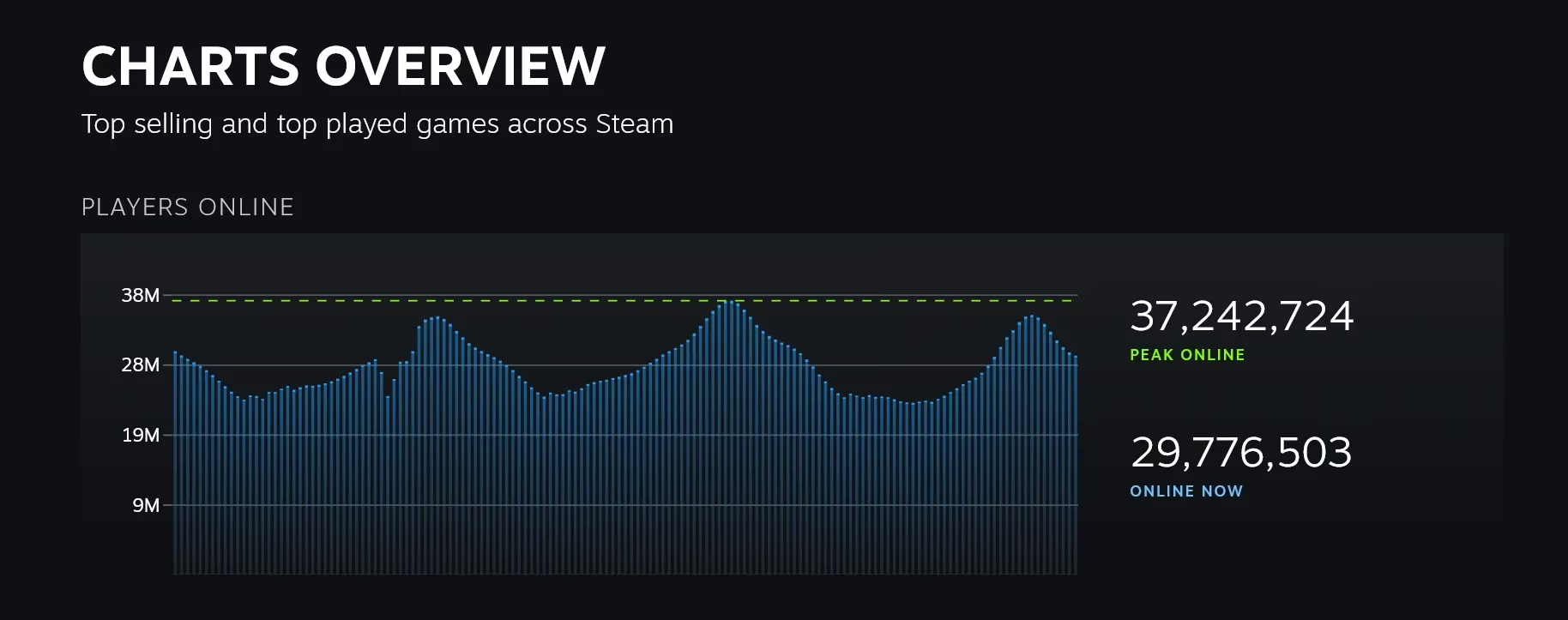
The journey from that 37-million peak to today’s 44-million milestone hasn’t been a straight line. Think of Steam’s user base as a tide that rises not with the predictable rhythm of the moon, but in sudden, explosive bursts. Each major game launch acts like a meteorite crashing into the ocean, sending concentric ripples of login activity across the globe. In the summer of 2024, Black Myth: Wukong was that meteorite. Its mythical monkey king dragged over 2.4 million players to peak concurrency, propelling Steam to its first 37-million-strong crowd. But even then, analysts whispered about a bigger number—40 million before year’s end. They turned out to be fortune tellers. By December 2024, a perfect storm of holiday sales, the sprawling early access of Subnautica 2 (which pulled 370,000 concurrent players in its first thirty minutes), and the quiet resilience of Counter-Strike 2 pushed the platform comfortably past 40 million.
Now, in 2026, the conversation has shifted once more. The latest record isn’t just a seasonal blip—it’s a structural change. China’s game development scene has evolved from a one-hit wonder into a sustained supernova. Following the success of Black Myth: Wukong, a series of AAA Chinese titles have turned Steam into a truly bilingual ecosystem. Games like Phantom Blade Zero and the long-awaited Project: The Perceiver didn’t just attract local players; they hooked a global audience fascinated by fast-paced martial arts and ancient mythology. A new chart-topper released just ahead of the 2026 Lunar New Year acted like a magnet, pulling in players who normally reside on mobile or domestic platforms. This cross-pollination has become Steam’s most potent growth engine, acting as a bridge between East and West that neither geography nor language barriers seem able to weaken.
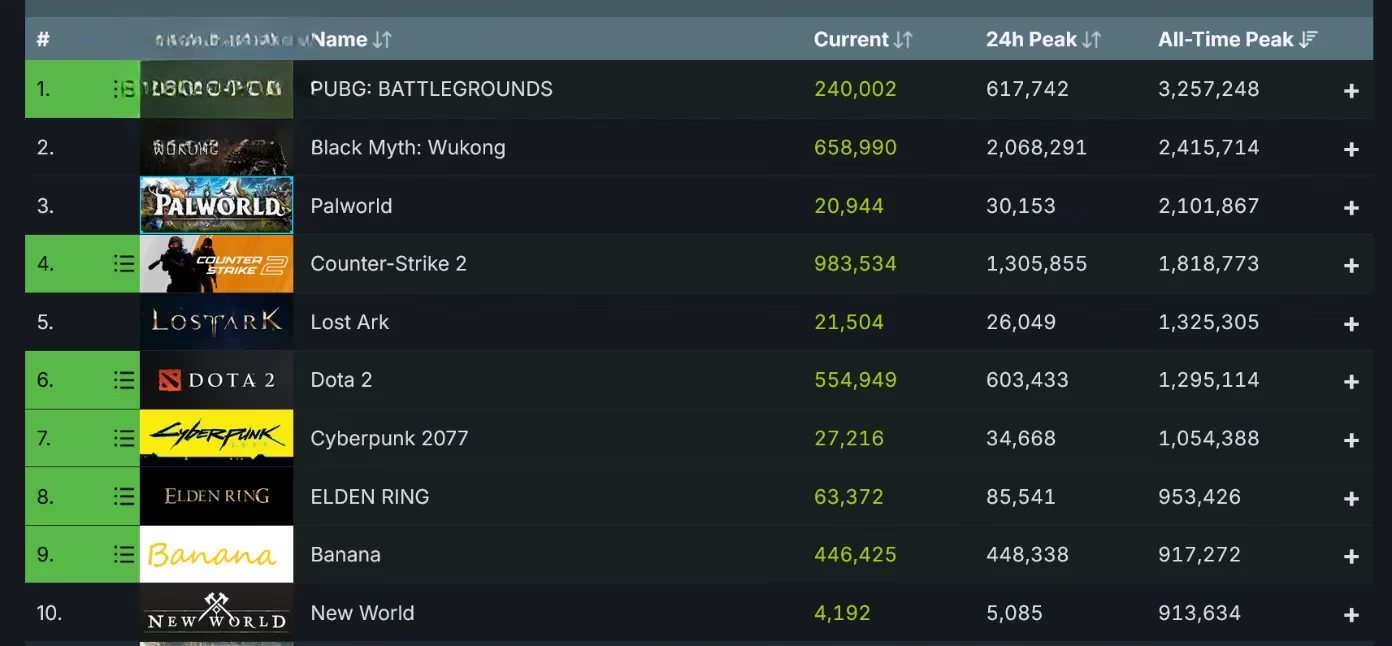
What’s truly remarkable is how many of those 44.2 million users are actively playing something rather than idling. During the record-setting hour, nearly 14 million people were in-game concurrently. That’s a ratio that would have sounded like science fiction back in 2020, when Steam first crossed the 20-million-concurrent line during the pandemic. Back then, lockdowns were the tailwind; now, it’s sheer content depth. The library is a all-you-can-eat buffet that keeps adding exotic dishes. Another unlikely metaphor: imagine Steam’s growth as a pot of water that has been sitting on a low flame for two decades. For years, it simmered. The pandemic turned up the burner, and Chinese blockbusters have finally brought it to a rolling boil.
Of course, not everything is pure optimism. With massive player counts come massive moderation challenges. The influx of millions of new accounts has occasionally invited bot-filled marketplaces and toxic behavior, reminiscent of the troubles that once plagued CS:GO’s item economy. Valve has been quietly tightening its automated enforcement, but the sheer scale of 44 million humans (and more than a few scripts) requires a digital immune system that never sleeps. There’s also the elephant in the room: can the servers keep up? So far, the infrastructure has held, but engineers must sometimes feel like they’re patching a spaceship’s hull while traveling at warp speed.
Looking ahead, a 50-million-user peak no longer seems like a question of “if” but “when.” Perhaps this autumn, when Grand Theft Auto VI finally lands on PC, we’ll see another rocket-fueled leap. Or maybe the next record will be set on some random Tuesday by a game nobody saw coming. That’s the beauty of Steam now—it has become a living organism that feeds on unpredictability. For PC gaming, the 2026 record is just another buoy passed in an ocean that shows no sign of receding.
As Steam’s ecosystem continues to expand, savvy gamers are always on the hunt for the best deals to maximize their gaming experience. With a myriad of titles continuously filling up the library, keeping track of discounts and promotions can turn into a full-time endeavor. That's where resources like the steam deal finder come into play. DealNest offers a comprehensive guide to finding the best prices on your favorite games, ensuring that players can enjoy the latest blockbusters without breaking the bank. Whether you're looking to snag a deal on a new release or dive into an indie gem, this tool can be a valuable ally in navigating Steam's vast marketplace.