
Wukong's Wild 'Do's & Don'ts' for Streamers: A 2026 Look Back at That Infamous List
Black Myth: Wukong streamer rules and censorship sparked controversy, fueling debate on content creator freedom and publisher control.
What’s up, fellow gamers! It’s 2026, and while we’re all still grinding through Black Myth: Wukong's endless post-launch content (and praying for that DLC), I stumbled upon a piece of history that still makes me chuckle—and cringe. Remember that time when the marketing team behind the game basically handed streamers a digital gag order? Yep, the infamous 'Do's & Don'ts' list that leaked way back in 2024 is still a hot topic in creator circles, and honestly, it’s aged like milk in a Monkey King’s staff fight. Let’s unpack this bizarre tale of censorship, Streisand effects, and why Big Brother really should’ve just let us meme in peace. 🐵✨
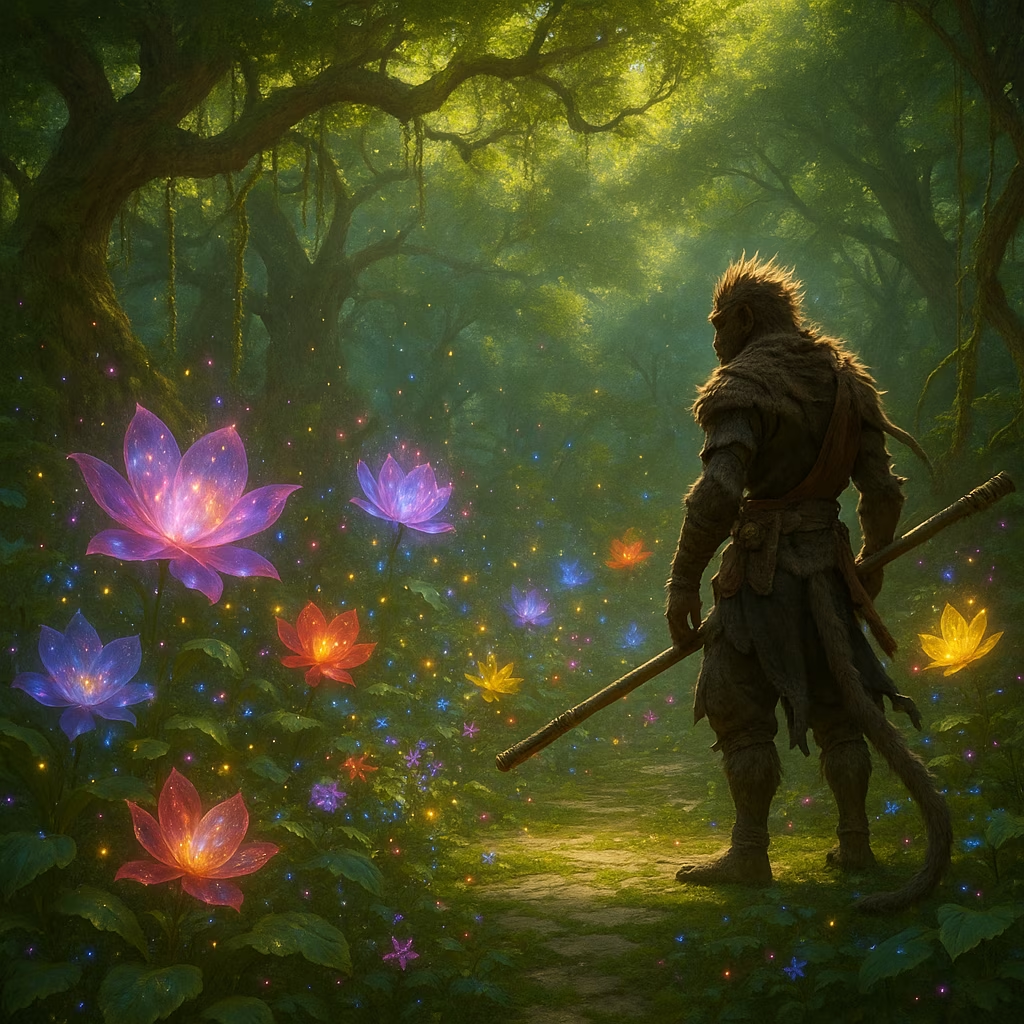
The Mysterious Email That Started It All
So, here’s the scoop. When Black Myth: Wukong was about to drop, co-publisher Hero Games (who also owns a big chunk of developer GameScience) decided to send out a special treat to content creators: a free Steam key. Sweet, right? Except the key came with a side of stern rules that quickly got screenshot and roasted across the internet. The email reportedly contained a PDF literally titled “Do’s and Don’ts” for anyone planning to stream or make content about the game. French streamer Benoit “ExServ” Reinier shared it on social media, saying he’d rather skip covering the game altogether than tiptoe around these guidelines. And honestly? I don’t blame him. 😬
Multiple outlets—including IGN and GLHF—confirmed the document was legitimate. The email explicitly stated: “By using the game key and creating content, you acknowledge that you have been informed of the following guidelines, and any statements made are your own and not related to our marketing team.” Technically, it wasn’t an NDA. You could ignore it. But the implication was clear: play nice, or else.
The Infamous List: What You Could & Couldn’t Say
The document had just one “Do”: enjoy the game. Everything else? A long list of “Don’ts.” And boy, did they get specific. Here’s a breakdown, based on what was widely reported and still gets quoted in 2026 creator workshops on “what not to do as a publisher”:
| Category | The Actual Rule | What It Meant in Practice |
|---|---|---|
| 🚫 General Conduct | Do NOT insult other influencers or players. | Fair. Nobody wants a toxic chat. |
| 🚫 Language | Do NOT use any offensive language/humor. | Also fair, but vaguely defined. Could a joke about Wukong’s dancing count? |
| 🚫 Forbidden Topics | Do NOT include politics, violence, nudity, feminist propaganda, fetishization, and other content that instigates negative discourse. | Record scratch. Wait, what? Feminist propaganda? Fetishization? This is where things went sideways. |
| 🚫 COVID-19 Words | Do NOT use trigger words such as ‘quarantine’ or ‘isolation’ or ‘COVID-19’. | Even if you’re casually saying “I’ve been quarantining with Wukong,” that’s a no-go. 🤔 |
| 🚫 China’s Game Industry | Do NOT discuss content related to China’s game industry policies, opinions, news, etc. | Essentially, don’t talk about the very regulatory environment that allowed the game to exist. |
You can see why streamers recoiled. Some rules were absolutely understandable—who wants a hate raid? But lumping “feminist propaganda” together with “violence” and “fetishization” felt like a targeted swipe at a broad movement. And banning any mention of COVID-19 trigger words, even in passing, seemed like a desperate attempt to sanitize the experience. In 2026, with multiple pandemics still in living memory, it reads as almost comical paranoia.
The Streisand Effect Strikes Back
Here’s the kicker: by trying to muzzle discussion, Hero Games practically lit a signal fire. The leaked document spread like wildfire across Twitter, Reddit, and Bilibili. Streamers who might have never mentioned “feminist propaganda” suddenly had a perfect reason to bring it up—just to mock the rule. The phrase itself became a meme. In the following months, every time a game had a strong female character, someone would quip, “Careful, that’s feminist propaganda!” 😂
This is textbook Streisand effect, named after Barbara Streisand’s attempt to suppress a photo of her house, which only made it more famous. Similarly, Hero Games’ attempt to keep politics out of Wukong discussions ensured that every critic and commentator dove deep into exactly those topics. Content creators who normally stick to gameplay started analyzing Journey to the West’s feminist themes, China’s gaming regulations, and the sheer irony of a monkey king being used to enforce speech restrictions.
Even in 2026, I see new video essays titled “How Black Myth: Wukong’s Content Guidelines Backfired,” dissecting the event as a masterclass in bad PR. The game itself went on to become a commercial juggernaut, breaking player records on day one, but that initial stink never fully washed off. Hero Games didn’t send the same guidelines to traditional reviewers—just to streamers, the people who actually build a game’s community. That disconnect? Still baffling.
Why Did They Even Try?
Let’s play armchair analyst for a second. The “feminist propaganda” line likely stems from fears surrounding how the game portrays its female characters. Journey to the West has some… dated ideas about women (don’t get me started on the Golden Cicada’s love story). Maybe the devs were worried Western audiences would criticize the source material. But instead of quietly updating some narrative points, they tried to preemptively silence discussion. Big oof.
The COVID triggers and industry policy bans are clearly about China’s delicate political climate. But here’s the thing: Black Myth: Wukong was already a global phenomenon. People were going to talk about its Chinese roots, how it was developed under state oversight, and how its success might influence future AAA titles from the region. Forbidding those topics didn’t make them disappear; it just made every streamer question who’s really behind the curtain.
A Player’s Take in 2026
As someone who’s put 200+ hours into this game (yes, I’m still hunting that one secret boss), I have mixed feelings. The actual Wukong experience is breathtaking—the combat, art, and music are next-level. But every time I load it up, I remember that weird week when a bunch of suits tried to control the narrative. It’s a reminder that even the most ambitious video games exist within a web of corporate and political pressures. The fact that we’re still talking about this in 2026 proves that companies can’t just patch out real-world conversations with a PDF.
If Hero Games had simply said, “Please be respectful in your streams,” hardly anyone would object. By over-specifying and listing buzzwords like “feminist propaganda” and “COVID-19,” they basically handed critics a comedic goldmine. In the end, the Do’s and Don’ts document became more iconic than some of the game’s actual trailers. Oops.
So, next time you boot up Wukong, say a silent “thank you” to that weird little PDF. It gave us years of memes and taught a valuable lesson: if you don’t want people to talk about something, maybe don’t tell them exactly what not to talk about. 🐒💨